Education
General Learner Outcomes Guide for Effective Education

Introduction
Education today is no longer just about memorizing facts or passing exams. It focuses on developing skills, values, and abilities that help learners succeed in real life. This is where general learner outcomes play an essential role in shaping modern education systems. These outcomes define what students should know, be able to do, and value after completing their learning journey. Teachers, institutions, and policymakers rely on them to design meaningful educational experiences. Understanding general learner outcomes can help both educators and students achieve more effective and purposeful learning.
What Are General Learner Outcomes?
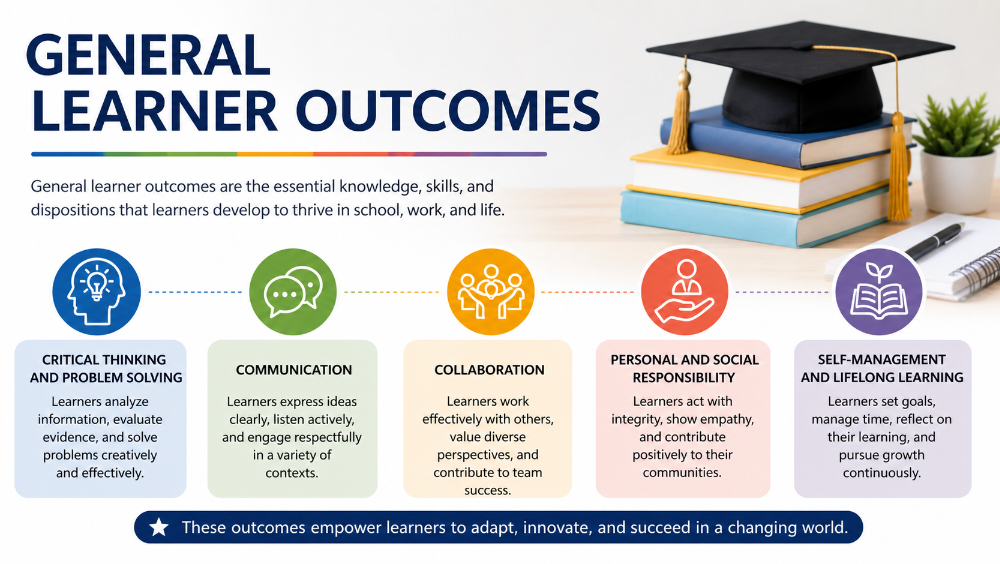
General learner outcomes refer to a set of broad skills, competencies, and attitudes that students are expected to develop through their education. These outcomes go beyond subject-specific knowledge and focus on overall personal and academic growth. They help learners become critical thinkers, effective communicators, and responsible individuals.
In most education systems, general learner outcomes serve as a guiding framework for curriculum development. They ensure that learning is not limited to textbooks but extends to real-world application. For example, a student learning science should not only understand theories but also apply problem-solving skills in everyday situations.
Key Characteristics of General Learner Outcomes
General learner outcomes are designed to be flexible and adaptable across different subjects and grade levels. They are not restricted to one discipline, making them valuable for holistic education. These outcomes are also measurable, allowing educators to assess student progress effectively.
Another important feature is their focus on lifelong learning. General learner outcomes encourage students to develop habits such as curiosity, adaptability, and self-reflection. These qualities are essential in a rapidly changing world where continuous learning is necessary.
Why They Matter in Modern Education
The importance of general learner outcomes has increased as education systems evolve to meet global demands. Employers today value skills like communication, teamwork, and critical thinking more than rote knowledge. These outcomes help bridge the gap between academic learning and real-world expectations.
By emphasizing general learner outcomes, schools can prepare students for both higher education and professional careers. They also promote personal development, helping learners become confident and independent individuals.
Core Components of General Learner Outcomes
General learner outcomes typically include several core components that define the overall learning experience. These components ensure that students develop a balanced set of skills and competencies.
Communication Skills
Effective communication is a key part of general learner outcomes. Students are expected to express their ideas clearly, both verbally and in writing. This includes listening skills, presentation abilities, and the capacity to engage in meaningful discussions.
Communication skills also involve understanding different perspectives. Students learn to respect diverse opinions and collaborate with others, which is essential in both academic and professional settings.
Critical Thinking and Problem Solving
Another major element of general learner outcomes is critical thinking. Students are encouraged to analyze information, evaluate evidence, and make informed decisions. This skill helps them solve complex problems and think independently.
Problem-solving abilities are developed through practical activities and real-life scenarios. Instead of memorizing solutions, students learn how to approach challenges creatively and logically.
Personal and Social Responsibility
General learner outcomes also focus on building character and responsibility. Students are taught to act ethically, respect others, and contribute positively to society. These values are crucial for creating responsible citizens.
Social responsibility includes teamwork and collaboration. Students learn how to work effectively in groups, share responsibilities, and support one another in achieving common goals.
Self-Management and Lifelong Learning
Self-management is another important aspect of general learner outcomes. It involves time management, goal setting, and self-discipline. Students learn how to take control of their learning and stay motivated.
Lifelong learning is closely linked to self-management. Students are encouraged to develop a love for learning that continues beyond the classroom. This mindset helps them adapt to new challenges and opportunities throughout their lives.
How General Learner Outcomes Are Implemented
Implementing general learner outcomes requires careful planning and collaboration among educators. Schools need to design curricula that align with these outcomes and provide meaningful learning experiences.
Curriculum Design and Integration
Curriculum design plays a crucial role in achieving general learner outcomes. Teachers integrate these outcomes into lesson plans, ensuring that each activity contributes to overall development. This approach makes learning more relevant and engaging.
Instead of focusing solely on exams, educators use various teaching methods such as projects, discussions, and hands-on activities. These methods help students apply their knowledge in practical situations.
Assessment and Evaluation
Assessing general learner outcomes can be challenging because they involve skills and attitudes rather than just knowledge. Educators use a variety of assessment methods, including observations, presentations, and portfolios.
These assessments provide a more comprehensive understanding of student progress. They also help identify areas where students need additional support or improvement.
Role of Teachers and Educators
Teachers play a central role in developing general learner outcomes. They act as facilitators, guiding students through the learning process. Instead of simply delivering information, they encourage exploration and critical thinking.
Educators also create a supportive learning environment where students feel comfortable expressing their ideas. This environment fosters creativity and confidence, which are essential for achieving general learner outcomes.
Benefits of General Learner Outcomes
The benefits of general learner outcomes extend beyond the classroom. They have a lasting impact on students’ personal and professional lives.
Improved Academic Performance
Students who develop general learner outcomes tend to perform better academically. They understand concepts more deeply and can apply their knowledge effectively. This leads to better results and a stronger foundation for future learning.
These outcomes also help students become more organized and focused. They learn how to manage their time and prioritize tasks, which improves their overall academic performance.
Enhanced Career Readiness
General learner outcomes prepare students for the workforce by developing essential skills such as communication, teamwork, and problem-solving. Employers value these skills highly, making students more competitive in the job market.
By focusing on general learner outcomes, education systems can produce graduates who are ready to meet the demands of modern careers. This benefits both individuals and society as a whole.
Personal Growth and Development
Personal growth is another significant benefit of general learner outcomes. Students become more confident, independent, and self-aware. They learn how to handle challenges and adapt to new situations.
These outcomes also promote emotional intelligence, helping students understand and manage their emotions. This contributes to healthier relationships and overall well-being.
Challenges in Achieving General Learner Outcomes
Despite their importance, implementing general learner outcomes is not without challenges. Schools and educators often face obstacles that can affect their effectiveness.
Limited Resources and Training
One common challenge is the lack of resources and training for teachers. Educators need proper support to integrate general learner outcomes into their teaching methods. Without adequate training, it can be difficult to achieve desired results.
Schools also require resources such as technology and learning materials to support these outcomes. Limited access to these resources can hinder implementation.
Balancing Academic Content and Skills
Another challenge is balancing academic content with skill development. Teachers often have limited time to cover both subject knowledge and general learner outcomes. This can lead to a focus on exams rather than holistic learning.
To address this issue, education systems need to prioritize both aspects equally. This ensures that students receive a well-rounded education.
Measuring Intangible Skills
Measuring skills such as critical thinking and creativity can be difficult. Unlike traditional exams, these skills are not easily quantifiable. Educators need innovative assessment methods to evaluate general learner outcomes effectively.
Despite these challenges, continuous improvement and collaboration can help overcome these obstacles.
Future of General Learner Outcomes
The future of education is closely linked to the development of general learner outcomes. As technology and global trends continue to evolve, these outcomes will become even more important.
Integration with Technology
Technology plays a significant role in enhancing general learner outcomes. Digital tools and online platforms provide new opportunities for interactive and personalized learning. Students can access a wide range of resources and collaborate with peers worldwide.
This integration also helps develop digital literacy, which is an essential skill in the modern world.
Global Perspective on Learning
Education is becoming increasingly global, and general learner outcomes reflect this trend. Students are encouraged to think beyond their local context and understand global issues. This perspective helps them become informed and responsible global citizens.
By focusing on general learner outcomes, education systems can prepare students for a connected and dynamic world.
Conclusion
General learner outcomes are a vital component of modern education, shaping how students learn and grow. They go beyond traditional academic goals by focusing on skills, values, and personal development. By emphasizing communication, critical thinking, responsibility, and lifelong learning, these outcomes prepare students for real-world challenges. Although there are challenges in implementation, the benefits far outweigh the difficulties. Schools, educators, and policymakers must continue to prioritize general learner outcomes to ensure a well-rounded education. Ultimately, these outcomes help create capable, confident, and responsible individuals who can thrive in any environment.
FAQs
What are general learner outcomes in simple terms?
General learner outcomes are the skills, abilities, and values that students are expected to develop through education, beyond just academic knowledge.
Why are general learner outcomes important?
They are important because they prepare students for real-life challenges by developing critical thinking, communication, and problem-solving skills.
How are general learner outcomes assessed?
They are assessed through various methods such as projects, presentations, observations, and portfolios rather than traditional exams alone.
Can general learner outcomes improve career opportunities?
Yes, general learner outcomes enhance employability by developing skills that employers value, such as teamwork and communication.
How can teachers support general learner outcomes?
Teachers can support them by using interactive teaching methods, encouraging critical thinking, and creating a supportive learning environment.
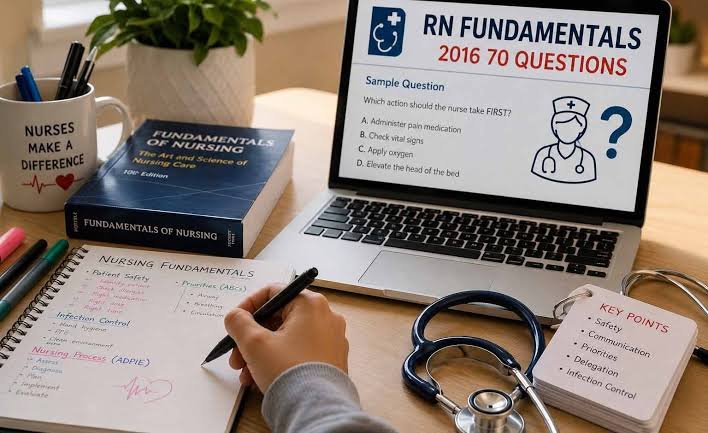
Nursing school throws a lot at you, but few milestones feel as nerve-wracking as a fundamentals proctored exam. If you’re searching for information on the RN Fundamentals 2016 70 questions test, you’re probably trying to figure out what’s actually on it, how it’s scored, and how to walk in feeling prepared instead of panicked. This article breaks down everything a nursing student needs to know about this type of exam, from the core content areas to smart study habits that actually move the needle on test day.
Fundamentals exams like this one exist for a simple reason: before a nursing student can move on to specialty courses like pediatrics, mental health, or critical care, they need to prove they understand the building blocks of safe patient care. The RN Fundamentals 2016 70 questions format is designed to test exactly that — a broad but foundational slice of nursing knowledge, all packed into a single proctored sitting.
What Is the RN Fundamentals 2016 70 Questions Exam?
This exam typically refers to a proctored fundamentals assessment, often associated with standardized nursing exam banks, that nursing programs use to measure whether students have mastered first-semester or first-year content. The “2016” reference usually points to the version or year of the question bank or test blueprint being used, since these exams are periodically updated to reflect changes in nursing practice guidelines, NCLEX test plans, and evidence-based care standards.
The structure itself — 70 multiple-choice and alternate-format questions — is common across many fundamentals-level assessments because it strikes a balance. It’s long enough to cover a wide range of topics without becoming an exhausting, multi-hour ordeal, and it gives instructors a reliable snapshot of where a student stands before they progress further in the program.
Most versions of this exam are scored on a percentage basis, with many programs requiring a minimum passing score (often somewhere between 70% and 80%, depending on the institution) to move forward in the curriculum. Because the stakes are real — failing can mean remediation, a delayed semester, or even being held back from clinical rotations — understanding the test’s structure ahead of time is half the battle.
Core Content Areas Covered in RN Fundamentals 2016 70 Questions
One of the most useful things you can do before sitting down for this exam is map out what’s likely to be tested. While exact blueprints vary by school and test bank, fundamentals-level nursing exams in this format generally draw from the following categories.
Basic Patient Care and Safety
Expect a meaningful chunk of questions on patient safety protocols. This includes fall risk assessment, proper use of restraints, infection control practices, hand hygiene standards, and identifying patients correctly before procedures. These topics show up heavily because safety errors are among the most common — and most preventable — mistakes new nurses make.
Vital Signs and Physical Assessment
Almost every fundamentals exam tests a student’s ability to interpret vital signs correctly. You’ll likely see scenario-based questions asking you to identify abnormal blood pressure, heart rate, respiratory rate, or oxygen saturation readings, and then choose the appropriate nursing action. Physical assessment techniques, including head-to-toe assessment order and documentation, are also common.
Medication Administration
Math-based dosage calculation questions, the rights of medication administration, and recognizing medication errors are staples of any fundamentals test. You don’t need to be a pharmacology expert at this stage, but you do need to demonstrate safe, basic administration knowledge.
Therapeutic Communication
Nursing fundamentals exams almost always include questions testing how well you can apply therapeutic communication techniques — open-ended questions, active listening, and appropriate responses to patients in distress. These questions test judgment as much as memorized facts.
Nursing Process and Care Planning
You’ll likely encounter questions about the steps of the nursing process: assessment, diagnosis, planning, implementation, and evaluation (often remembered as ADPIE). Expect to be asked to identify which step a particular nursing action belongs to or to prioritize care based on assessment findings.
Mobility, Hygiene, and Activities of Daily Living
Basic skills like positioning patients, assisting with ambulation, providing hygiene care, and preventing pressure injuries are foundational topics that show up consistently in this kind of exam.
Documentation and Legal/Ethical Considerations
Questions on proper charting, patient confidentiality (including HIPAA-related scenarios), informed consent, and scope of practice round out the content. These topics test whether you understand the legal framework nurses operate within, not just clinical skills.
How the 70-Question Format Tests Nursing Knowledge
The specific number of questions matters more than it might seem. A 70-question exam format gives test writers enough room to sample across every major content area without overloading any single topic. This typically translates into roughly 8 to 12 questions per major category, which means no single weak area will sink your entire score, but it also means you can’t afford large gaps in any one section either.
Many versions of this exam use a mix of traditional multiple-choice questions and NCLEX-style alternate format questions, such as select-all-that-apply, fill-in-the-blank calculations, or ordered-response questions. This mirrors the format nursing students will eventually face on the NCLEX-RN, which is part of why fundamentals exams are structured this way in the first place — they’re meant to build comfort with the testing style early.
Study Strategies for RN Fundamentals 2016 70 Questions
Knowing the content categories is only half the equation. How you study matters just as much as what you study.
Practice With Realistic Question Banks
Reading a textbook chapter and answering practice questions in a similar style and format are two very different skills. Spend the bulk of your study time working through practice questions that mimic the structure of the actual exam, since this builds both content knowledge and the test-taking stamina needed for a 70-question sitting.
Focus on Application, Not Memorization
Fundamentals exams rarely ask you to simply recall a fact. Instead, they present a scenario and ask what you would do. When reviewing material, always push yourself one step further than memorization by asking, “How would I apply this in a real patient situation?”
Build a Content Map Based on Weak Areas
After a few rounds of practice questions, patterns will emerge. Maybe dosage calculations are easy but therapeutic communication questions trip you up. Build a simple tracking sheet of your weak categories and dedicate extra review time to those areas in the days leading up to the exam.
Practice Time Management
With 70 questions to complete in a set time limit, pacing matters. Practice answering questions under timed conditions so you get a feel for how long you can spend per question without running out of time before reaching the end.
Review Rationales, Not Just Right Answers
When you get a practice question wrong, don’t just note the correct answer. Read the rationale behind it. Understanding why an answer is correct (and why the others are wrong) builds the kind of clinical reasoning that fundamentals exams are specifically designed to test.
Common Mistakes Students Make on Fundamentals Exams
Even well-prepared students stumble on this type of exam for a few predictable reasons. Overthinking straightforward safety questions is one of the most common — when in doubt, the safest, most basic nursing action is usually correct. Another frequent mistake is ignoring the question stem’s key details, such as missing words like “first,” “best,” or “most appropriate,” which change what the correct answer should be. Finally, students sometimes neglect dosage calculation practice because it feels tedious, only to lose easy points on test day due to simple math errors.
Why This Exam Matters for Your Nursing Career
It’s easy to view a fundamentals exam as just another hurdle, but the knowledge tested here forms the backbone of everything that comes next in nursing school and beyond. The skills assessed in the RN Fundamentals 2016 70 questions exam — patient safety, basic assessment, communication, and the nursing process — are the same skills you’ll lean on daily as a working nurse, regardless of which specialty you eventually choose. Taking this exam seriously, rather than just trying to scrape by, pays off well beyond the test itself.
Conclusion
The RN Fundamentals 2016 70 questions exam can feel intimidating, but it’s ultimately testing knowledge that every nursing student needs to internalize anyway. By understanding the core content areas, practicing with realistic question formats, focusing on application over memorization, and reviewing your weak spots methodically, you can walk into this exam with genuine confidence rather than guesswork. Treat it not as a box to check, but as an early opportunity to solidify the foundation your entire nursing career will be built on.
Frequently Asked Questions
1. What topics are most heavily tested on the RN Fundamentals 2016 70 questions exam?
The exam typically emphasizes patient safety, vital signs and assessment, medication administration basics, therapeutic communication, the nursing process, and documentation standards.
2. What score is usually needed to pass this type of fundamentals exam?
Passing scores vary by nursing program, but many schools set the threshold somewhere between 70% and 80%. Check with your specific program for its exact requirement.
3. How long should I study before taking a 70-question fundamentals exam?
Most students benefit from at least one to two weeks of focused review, including daily practice questions, though the right timeline depends on your existing comfort with the material.
4. Are the questions on this exam similar to NCLEX-style questions?
Yes, many versions include NCLEX-style formats such as select-all-that-apply and prioritization questions, which helps students build familiarity with that testing style early in their education.
5. What should I do if I fail the RN Fundamentals exam?
Most programs offer a remediation process, which may include additional study modules, instructor meetings, or a retake opportunity. Reach out to your nursing instructor promptly to understand your school’s specific policy.
What Is BinusCX and Why Is It Gaining Attention?
The education world has changed dramatically over the last few years. Traditional classrooms are no longer the only place where learning happens. Today, students expect flexibility, accessibility, and real-world skill development. That is exactly where BinusCX enters the picture.
Developed by Bina Nusantara University, BinusCX stands for BINUS Class eXtension. It is a digital learning ecosystem designed to extend classroom experiences beyond physical lectures and scheduled coursework. Instead of functioning like a standard learning management system, the platform creates an environment where students can develop both academic and professional competencies.
The platform officially emerged during a period when educational institutions worldwide were accelerating digital transformation. However, BinusCX was never intended as a temporary solution. Its creators envisioned a long-term educational framework that could bridge the gap between academic knowledge and industry expectations.
As employers increasingly prioritize adaptability, communication, leadership, and technical proficiency, universities must rethink how they prepare students. BinusCX represents one of the most ambitious efforts in Southeast Asia to address that challenge through technology-driven learning experiences.
The Origin and Vision Behind BinusCX
A Response to Modern Learning Challenges
Universities have traditionally excelled at delivering theoretical knowledge. Yet many graduates still enter the workforce lacking practical skills employers consider essential. Communication, collaboration, project management, and digital literacy often develop unevenly through conventional education.
The creators of BinusCX recognized this disconnect. Around 2019, teams within BINUS University began exploring ways to create a learning ecosystem that extended beyond lectures, assignments, and examinations. Their goal was simple yet ambitious: help students become workforce-ready before graduation.
Imagine a university classroom as a launchpad rather than a destination. Traditional education provides the runway, while platforms like BinusCX help students develop the momentum required for professional success. This philosophy became the foundation of the platform’s development.
The result was a system designed to encourage continuous learning, self-paced skill development, and meaningful engagement with industry-relevant content.
Launching During a Global Shift
When the platform officially launched in 2020, digital education was becoming a global necessity. Universities everywhere were searching for ways to maintain learning continuity during widespread disruptions.
Unlike many emergency solutions introduced during that period, BinusCX was designed with longevity in mind. Its infrastructure focused on scalability, accessibility, and integration with existing university systems. Rather than replacing traditional education, it aimed to enhance and expand it.
This strategic approach allowed BINUS University to create a sustainable learning environment capable of supporting future generations of students regardless of how educational delivery evolves.
How BinusCX Works
A Centralized Learning Environment
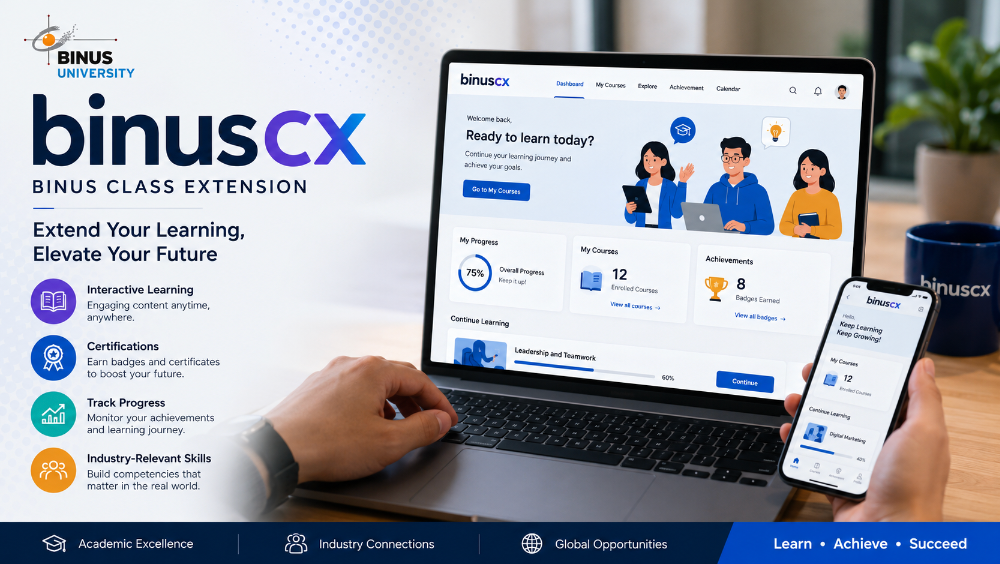
One of the most impressive aspects of BinusCX is its centralized approach. Students can access courses, assignments, announcements, certifications, and learning progress from a single dashboard.
Think of it as a digital command center. Instead of juggling multiple applications and platforms, users interact with one cohesive ecosystem. This streamlined experience reduces confusion and allows learners to focus on development rather than navigation.
The dashboard presents information clearly. Active modules, upcoming deadlines, learning achievements, and progress indicators remain visible at all times. As a result, students can manage their responsibilities more effectively.
This level of organization may seem simple, but it significantly improves engagement. When information becomes easier to access, participation naturally increases.
Cloud-Based Accessibility
Modern learners expect flexibility. Whether studying from home, commuting, or working part-time, they need educational resources available whenever required.
BinusCX addresses this need through cloud-based architecture. Students can access learning materials using laptops, tablets, or smartphones without being tied to a physical campus location.
This flexibility supports various learning styles. Some students prefer studying late at night. Others complete modules during lunch breaks or while traveling. The platform accommodates these preferences without compromising functionality.
Additionally, real-time synchronization ensures updates appear instantly. When lecturers publish new content or modify course information, students receive immediate access to the latest materials.
Key Features That Make BinusCX Different
Gamified Learning Experiences
One reason students lose motivation on digital platforms is the absence of engagement. Watching videos and reading documents can quickly become repetitive.
BinusCX tackles this challenge through gamification. The platform incorporates achievement systems, badges, progress tracking, and digital recognition mechanisms that encourage participation.
Imagine completing a challenging module and receiving a visible accomplishment that contributes to your professional profile. That small reward creates a sense of progress and achievement.
Gamification works because it taps into natural human psychology. People enjoy measurable growth. By transforming learning into a series of achievable milestones, BinusCX helps students stay motivated over extended periods.
This approach is particularly effective for younger learners accustomed to interactive digital experiences.
Professional Certifications
Employers increasingly value demonstrated skills over simple course completion. Recognizing this shift, BinusCX provides digital certificates tied to specific learning achievements.
These certifications can often be shared on professional networking platforms and included in portfolios. For students entering competitive industries, such credentials provide additional evidence of competency.
Consider two graduates applying for the same position. One presents only a degree. The other presents a degree plus verified certifications in leadership, communication, digital collaboration, and project management. The difference becomes immediately apparent.
By offering skill-focused credentials, BinusCX strengthens student employability and professional visibility.
Industry-Relevant Learning Tracks
Education becomes most valuable when it aligns with real-world demands. The platform includes specialized learning tracks designed around evolving industry requirements.
Examples include sustainability initiatives, product development methodologies, innovation strategies, digital communication, and leadership development. These topics reflect the skills employers increasingly seek across sectors.
Rather than relying solely on static academic content, the platform evolves alongside changing market expectations. This dynamic approach keeps learning practical and relevant.
How BinusCX Supports Student Success
Freshman Development Programs
The transition from high school to university often feels overwhelming. New students face unfamiliar systems, academic expectations, and social environments.
BinusCX addresses this challenge through structured onboarding experiences. New learners receive guided introductions to the platform, learning pathways, and university resources.
This process reduces uncertainty while building confidence. Students learn how to navigate digital environments before tackling more advanced educational challenges.
A strong beginning often determines long-term success. By investing in orientation and support, the platform creates a smoother educational journey from the start.
Continuous Skill Building
Traditional education frequently focuses on semester-based progress. Students complete courses, take exams, and move forward. However, professional development rarely follows such rigid timelines.
BinusCX promotes continuous learning through self-paced modules and supplementary resources. Students can strengthen weaknesses, explore new interests, and develop additional competencies throughout their academic careers.
For example, a computer science student might pursue leadership training. A business major could explore sustainability management. These cross-disciplinary opportunities create more versatile graduates.
The result is a broader educational experience that extends beyond degree requirements.
Personalized Learning Opportunities
Not every student learns the same way. Some prefer visual content, while others thrive through interactive exercises or practical projects.
Modern educational platforms must recognize these differences. BinusCX supports varied learning approaches through flexible content delivery and personalized progress tracking.
This adaptability helps students engage more effectively with material while maintaining ownership of their educational journey.
Learning becomes less about meeting institutional requirements and more about achieving personal growth objectives.
The Role of Technology in the BinusCX Ecosystem
Integration With Digital Tools
A major strength of BinusCX lies in its ability to integrate with broader digital ecosystems. Educational experiences often involve multiple tools for communication, collaboration, and content management.
Rather than creating isolated experiences, the platform connects these resources into a unified environment. Students can transition between learning activities without unnecessary friction.
This integration mirrors modern workplaces, where employees regularly interact with multiple technologies. Consequently, students gain familiarity with digital workflows before entering professional environments.
Such exposure becomes increasingly valuable as remote and hybrid work models continue expanding.
Data-Driven Learning Insights
One fascinating aspect of digital education is the ability to analyze learning behaviors. Platforms can identify engagement patterns, completion rates, and performance trends.
BinusCX uses these insights to improve educational experiences. Progress indicators help students monitor development while enabling educators to identify potential challenges.
Imagine training for a marathon without knowing your pace, distance, or improvement rate. Progress would feel uncertain. Learning works similarly.
By providing measurable feedback, the platform transforms abstract growth into visible achievements, making improvement easier to track and sustain.
Real-World Impact of BinusCX
Preparing Graduates for Employment
Employers consistently report a common concern: graduates often possess technical knowledge but struggle with workplace readiness.
Skills such as communication, adaptability, collaboration, and critical thinking frequently determine long-term success. Academic excellence alone is rarely enough.
BinusCX directly addresses this issue by embedding professional development into the student experience. Through specialized modules, certifications, and project-based activities, learners develop competencies that employers value.
This approach narrows the gap between education and employment. Students graduate with stronger portfolios, broader experiences, and greater confidence.
A Case Study in Digital Transformation
BINUS University has become widely recognized for its commitment to innovation. The development of BinusCX reflects a larger institutional strategy focused on digital transformation.
Rather than viewing technology as an optional enhancement, the university integrated it into the learning process itself. This shift created a more agile educational model capable of adapting to changing industry expectations.
Many universities continue relying on fragmented systems. By contrast, BinusCX demonstrates how a unified platform can support academic excellence, professional growth, and institutional efficiency simultaneously.
The lessons extend beyond Indonesia. Educational institutions worldwide face similar challenges and may draw inspiration from this model.
Challenges and Limitations of BinusCX
Internet Connectivity Requirements
Like most cloud-based systems, BinusCX depends heavily on internet access. Students in regions with unstable connectivity may encounter difficulties accessing content consistently.
Although improvements continue, infrastructure limitations remain a reality for many digital learning environments. Reliable internet access remains essential for maximizing platform benefits.
This challenge highlights a broader issue affecting online education globally rather than a platform-specific weakness.
The Learning Curve for New Users
Every digital platform introduces an adjustment period. New students occasionally feel overwhelmed by unfamiliar interfaces, features, and workflows.
Fortunately, orientation programs and support resources help reduce this learning curve. Most users become comfortable navigating the platform after initial exploration.
The experience resembles learning a new smartphone. At first, menus seem confusing. Within days, interactions become intuitive and effortless.
Maintaining Engagement
Even the best platforms cannot guarantee participation. Student motivation remains an important factor in learning outcomes.
Gamification, certifications, and interactive content help address this challenge, but personal commitment still plays a significant role. Ultimately, technology can create opportunities, yet students must choose to engage with them.
The Future of BinusCX and Digital Education
Expanding Beyond Traditional Learning
The future of education increasingly revolves around lifelong learning. Professional development no longer ends at graduation.
BinusCX appears positioned to support this shift. As industries evolve and new skills emerge, continuous learning platforms will become more valuable.
Future enhancements may include expanded artificial intelligence integration, adaptive learning systems, and improved accessibility features. These developments could further personalize educational experiences while increasing efficiency.
The platform’s ongoing evolution suggests a commitment to staying ahead of technological and educational trends.
Supporting the Digital Economy
Southeast Asia’s digital economy continues growing rapidly. Businesses increasingly seek professionals capable of thriving in technology-driven environments.
By emphasizing practical skills alongside academic knowledge, BinusCX helps prepare graduates for this reality. Students develop competencies aligned with contemporary workplace expectations rather than outdated employment models.
This alignment benefits both learners and employers. Graduates become more competitive, while organizations gain access to better-prepared talent.
As digital transformation accelerates, platforms like BinusCX will likely play an even larger role in shaping workforce readiness.
Conclusion
BinusCX represents far more than a typical online learning platform. It is a comprehensive educational ecosystem designed to bridge the gap between academic learning and professional success. Through gamification, certifications, industry-focused learning tracks, and flexible digital access, the platform helps students develop skills that matter in today’s competitive job market.
The success of BinusCX reflects a broader shift occurring across higher education. Universities are no longer judged solely by the knowledge they deliver. They are increasingly evaluated by how effectively they prepare students for real-world challenges. By integrating technology, skill development, and continuous learning into a single environment, BinusCX offers a compelling example of what modern education can achieve.
For students, the key takeaway is simple: actively engage with the platform’s opportunities rather than treating them as optional extras. For educators and institutions, BinusCX demonstrates how digital transformation can enhance learning without sacrificing academic quality. As the future of education becomes more connected, flexible, and skills-driven, platforms like BinusCX are likely to become essential components of student success.
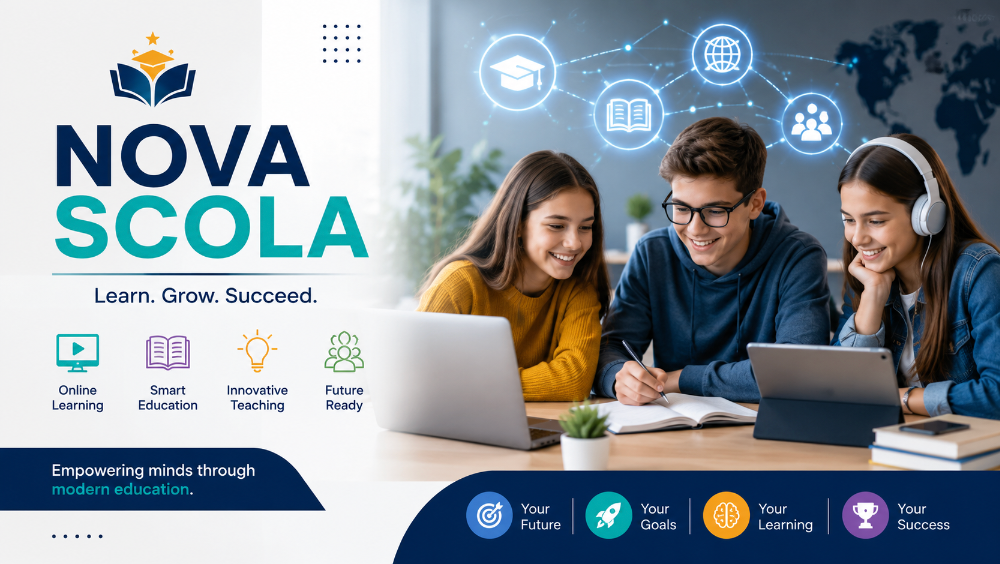
Education is changing rapidly, and many learners now look for platforms and systems that offer flexibility, innovation, and practical knowledge. One name that has gained attention in modern educational discussions is nova scola. Whether people are searching for online learning opportunities, academic support, or modern teaching methods, nova scola is increasingly becoming part of the conversation. The concept behind nova scola reflects a shift toward student-centered education that focuses on accessibility and growth. In today’s digital world, learners want educational systems that adapt to their needs instead of forcing everyone into the same structure. This article explores the meaning, importance, benefits, and future potential of nova scola in detail.
Understanding Nova Scola
The term nova scola carries a modern educational identity that combines innovation with effective learning practices. Many people associate nova scola with progressive teaching models that encourage creativity, digital literacy, and independent thinking. Unlike traditional systems that rely heavily on memorization, nova scola promotes practical understanding and interactive learning experiences. Students today benefit more from systems that help them solve real-world problems rather than simply repeat textbook information. This educational approach is becoming increasingly valuable in schools, colleges, and online learning environments.
The Meaning Behind Nova Scola
The phrase nova scola represents the idea of a “new school” or a refreshed approach to education. It symbolizes transformation in the way knowledge is delivered and understood. Modern learners expect educational systems to integrate technology, collaboration, and personalized teaching methods. Nova scola reflects these expectations by supporting adaptive learning environments. This concept appeals to students who want education to be more engaging and relevant to current industry demands.
Why Modern Learners Prefer Nova Scola
Many students prefer nova scola because it aligns with modern lifestyles and learning preferences. Traditional classrooms often follow rigid schedules that may not work for everyone. In contrast, nova scola supports flexibility and digital accessibility, making education more convenient. Learners can access resources, collaborate with peers, and develop skills at their own pace. This freedom encourages motivation and creates a more enjoyable educational experience.
The Core Principles of Nova Scola
Every modern educational model is built on certain principles, and nova scola is no exception. Its structure focuses on improving both academic and personal development. These principles are designed to prepare students for future challenges in a competitive world. By combining technology with effective teaching strategies, nova scola creates a balanced learning environment. The following principles are often associated with this approach.
Student-Centered Learning
One of the strongest aspects of nova scola is its focus on student-centered learning. Instead of placing teachers at the center of education, this method prioritizes the needs and interests of learners. Students are encouraged to ask questions, participate in discussions, and explore topics independently. This approach increases confidence and critical thinking abilities. It also helps students become more responsible for their own educational progress.
Technology Integration
Technology plays a major role in the success of nova scola. Digital tools make learning more interactive and accessible for students across different locations. Video lessons, online assessments, and collaborative platforms improve communication and engagement. Modern educational technology also helps teachers track student performance more effectively. As digital learning continues to expand, nova scola remains highly relevant in today’s academic environment.
Flexible Learning Opportunities
Flexibility is another defining feature of nova scola. Students often have different learning styles, schedules, and responsibilities. Some may prefer visual learning, while others understand concepts better through discussion or practice. Nova scola supports multiple learning formats to ensure a more personalized experience. This flexibility allows students to balance education with work, family, and other commitments.
Benefits of Nova Scola for Students
Students can gain many advantages from participating in a nova scola learning environment. These benefits extend beyond academic knowledge and contribute to personal growth as well. Modern educational systems must help learners build practical skills for the future workplace. Nova scola encourages this by promoting adaptability, communication, and problem-solving abilities. As a result, students become more prepared for both professional and personal success.
Improved Engagement and Motivation
Many traditional classrooms struggle to keep students fully engaged. Nova scola addresses this issue by making learning more interactive and meaningful. Activities such as group projects, multimedia lessons, and practical assignments create stronger student participation. Learners become more interested when they can connect lessons to real-life situations. Increased engagement often leads to better academic performance and stronger confidence.
Better Access to Educational Resources
Access to information is essential in modern education, and nova scola provides a wide range of learning resources. Students can access digital libraries, recorded lectures, and online study materials from almost anywhere. This convenience makes it easier for learners to review difficult topics and continue improving outside the classroom. Educational equality also improves when resources become more widely available. As technology expands globally, nova scola can help reduce barriers to quality education.
Development of Future-Ready Skills
The world is evolving quickly, and students need skills that match future industry demands. Nova scola encourages creativity, teamwork, communication, and digital literacy. These abilities are highly valued in modern workplaces and professional environments. Students who develop these skills early often adapt more easily to career challenges. This makes nova scola particularly appealing for learners preparing for competitive job markets.
How Nova Scola Supports Teachers
Teachers also benefit significantly from the nova scola approach. Modern educational systems should support educators as much as students. Teaching becomes more effective when instructors have access to innovative tools and flexible teaching methods. Nova scola helps teachers create engaging lessons while monitoring student progress efficiently. This creates a healthier and more productive academic environment.
Enhanced Teaching Methods
Nova scola encourages teachers to use creative teaching strategies instead of relying solely on lectures. Interactive presentations, collaborative activities, and digital platforms improve classroom participation. Teachers can adapt lessons according to student needs and performance levels. This flexibility helps educators address learning challenges more effectively. As a result, teaching becomes more dynamic and rewarding.
Efficient Assessment and Feedback
Assessment methods within nova scola are often more advanced and practical than traditional exams. Teachers can use quizzes, projects, presentations, and digital evaluations to measure understanding. Immediate feedback helps students identify weaknesses and improve quickly. Teachers also gain valuable insights into student performance patterns. This process creates a more supportive learning experience for everyone involved.
The Role of Nova Scola in Online Education
Online education has grown tremendously in recent years, and nova scola fits naturally into this transformation. Digital learning environments require systems that prioritize accessibility, engagement, and flexibility. Nova scola supports these goals through interactive technology and learner-focused strategies. As more institutions adopt online learning models, the importance of nova scola continues to increase. It has become an essential part of modern educational discussions.
Accessibility Across Different Regions
One major advantage of nova scola is its ability to reach students in different geographic locations. Online learning removes many physical barriers associated with traditional education. Students from rural or underserved communities can access quality learning opportunities through digital platforms. This wider accessibility supports educational inclusion on a larger scale. Nova scola helps ensure that more learners can benefit from modern education.
Continuous Learning Opportunities
Learning no longer ends after graduation, and nova scola supports lifelong education. Professionals often need to update their skills to remain competitive in changing industries. Flexible online courses and digital training programs make continuous learning more practical. Nova scola encourages people of all ages to continue developing their knowledge and abilities. This mindset is essential in today’s rapidly evolving world.
Challenges and Future Potential of Nova Scola
While nova scola offers many benefits, it also faces certain challenges. Educational systems must continue improving to meet changing student expectations and technological advancements. Some institutions may struggle with digital infrastructure, training, or accessibility issues. However, the long-term potential of nova scola remains highly promising. As technology becomes more advanced, educational innovation will likely continue expanding.
Adapting to Technological Change
Technology evolves quickly, and educational systems must adapt accordingly. Nova scola depends heavily on digital tools and online platforms. Institutions need regular updates, teacher training, and technical support to maintain effective learning environments. Without proper adaptation, some schools may face difficulties implementing modern educational systems. Continuous investment in educational technology is therefore essential.
Expanding Global Educational Access
The future of nova scola may involve greater global collaboration and accessibility. Students from different countries can already participate in shared learning experiences through digital platforms. International cooperation can improve cultural understanding and educational diversity. As internet access expands worldwide, nova scola may become even more influential. This global reach could transform the future of education on a massive scale.
Conclusion
Nova scola represents a modern vision of education that prioritizes flexibility, accessibility, and student engagement. Its approach combines technology with innovative teaching methods to create more effective learning experiences. Students benefit from personalized learning opportunities, practical skill development, and increased access to educational resources. Teachers also gain improved tools for instruction, assessment, and classroom interaction. As online education continues to grow, nova scola is becoming increasingly important in shaping future learning environments. Although challenges such as technological adaptation still exist, the long-term potential of nova scola remains highly promising. By supporting creativity, collaboration, and lifelong learning, nova scola continues to redefine how education can evolve in the modern world.
FAQs About Nova Scola
What is nova scola?
Nova scola is a modern educational concept that focuses on flexible, technology-driven, and student-centered learning methods. It emphasizes innovation and accessibility in education.
Why is nova scola becoming popular?
Nova scola is gaining popularity because it supports personalized learning, digital education, and practical skill development. Many students prefer its flexible and engaging learning environment.
How does nova scola help students?
Nova scola helps students by improving engagement, providing better access to resources, and encouraging future-ready skills such as communication and digital literacy.
Can nova scola support online learning?
Yes, nova scola is highly compatible with online learning. Its structure supports digital platforms, remote education, and flexible learning opportunities for students worldwide.
What is the future of nova scola?
The future of nova scola looks promising as technology continues to transform education. It may play a major role in expanding global access to quality learning experiences.

RN Fundamentals 2016 70 Questions: A Complete Study Guide for Nursing Students

Kaliscan: A Closer Look at the Free Manga Reading Site

Coyyn: The Future of Digital Finance and Blockchain Tools

Boeing drafting room history, design process, and modern evolution

Major Trends in Technology Togtechify Shaping Future Innovation

Does amazon hire felons: hiring policy explained now
-
 Business1 month ago
Boeing drafting room history, design process, and modern evolution
-
 Tech1 month ago
Major Trends in Technology Togtechify Shaping Future Innovation
-
 Business1 month ago
Does amazon hire felons: hiring policy explained now
-

 Tech1 month ago
switch off torch: easy steps to turn off flashlight on phone
-

 Tech1 month ago
Kellogg Innovation Network: Global Leadership and Impact Hub
-
 Blog1 month ago
Champions house wrexham community hub growth impact
-
 Tech1 month ago
Adaptive network control for dynamic intelligent network systems
-
 Education1 month ago
Academic Performance Indicator Guide for Student Success Today